Our Four Pillars
The Alchemy of Assam
We believe you should know exactly what touches your skin.
No polyester. No synthetic mixing. Just 100% natural, handloom purity.
01
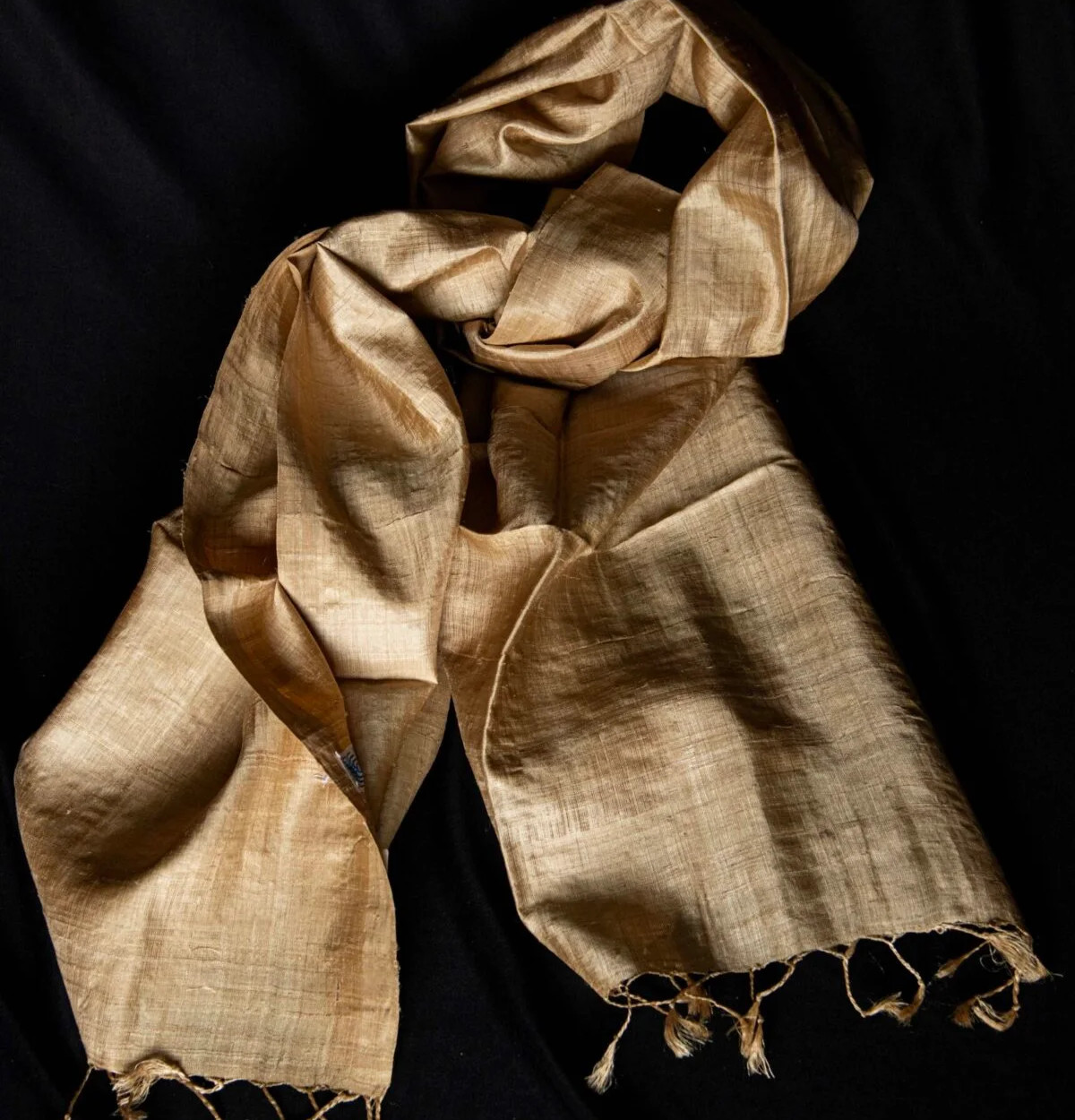
Muga
The Golden Pride of Assam
The Rare Alchemy+
Beyond its golden shimmer, Muga is celebrated for its high tensile strength. It is so durable that a Muga garment can last for generations, becoming more lustrous and softer with every wash — a true heirloom fabric.
The Cultural Connection+
Deeply intertwined with Assamese identity, traditionally used for Mekhela Chadors and ceremonial attire. The Antheraea assamensis silkworm is highly sensitive to pollution, so it can only thrive in the pristine, biodiverse Brahmaputra Valley.
02
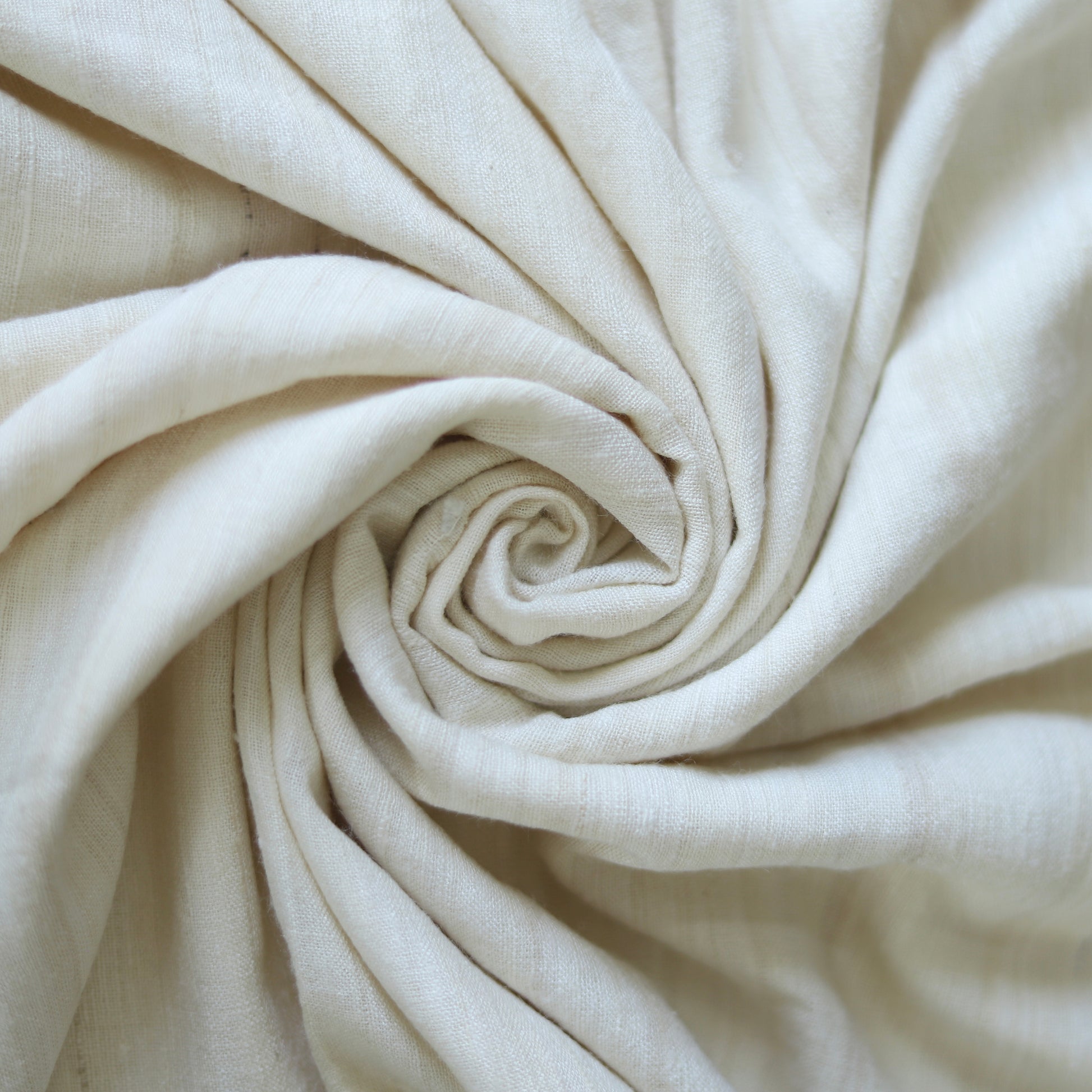
Eri
The Sustainable Fabric of Peace
The “Wool” of Silk+
Because Eri is spun like cotton or wool rather than reeled, it has a unique thermal property — cool in the heat and warm in the cold. Its matte, slightly textured surface offers a modern, sophisticated aesthetic.
The Ethical Narrative+
As Ahimsa (non-violent) silk, it represents a harmony between humanity, nature, and the lifecycle of the moth.
03
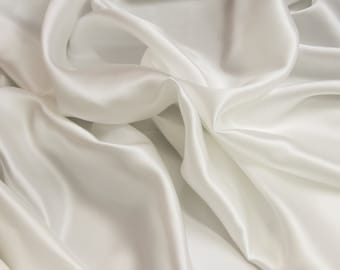
Mulberry (Paat)
The Timeless Elegance
The Lustre of Tradition+
Assamese Pat stands out for its clean, pearly white-to-silver sheen, achieved through indigenous reeling techniques. It is the hallmark of grace, often used for auspicious occasions.
The Artisanal Process+
The dedication required to maintain the Pat finish sets it apart. It holds structure perfectly — ideal for silhouettes that need a regal fall and a crisp, polished look.
04
Tussar
The Wild, Textured Beauty
The Forest Soul+
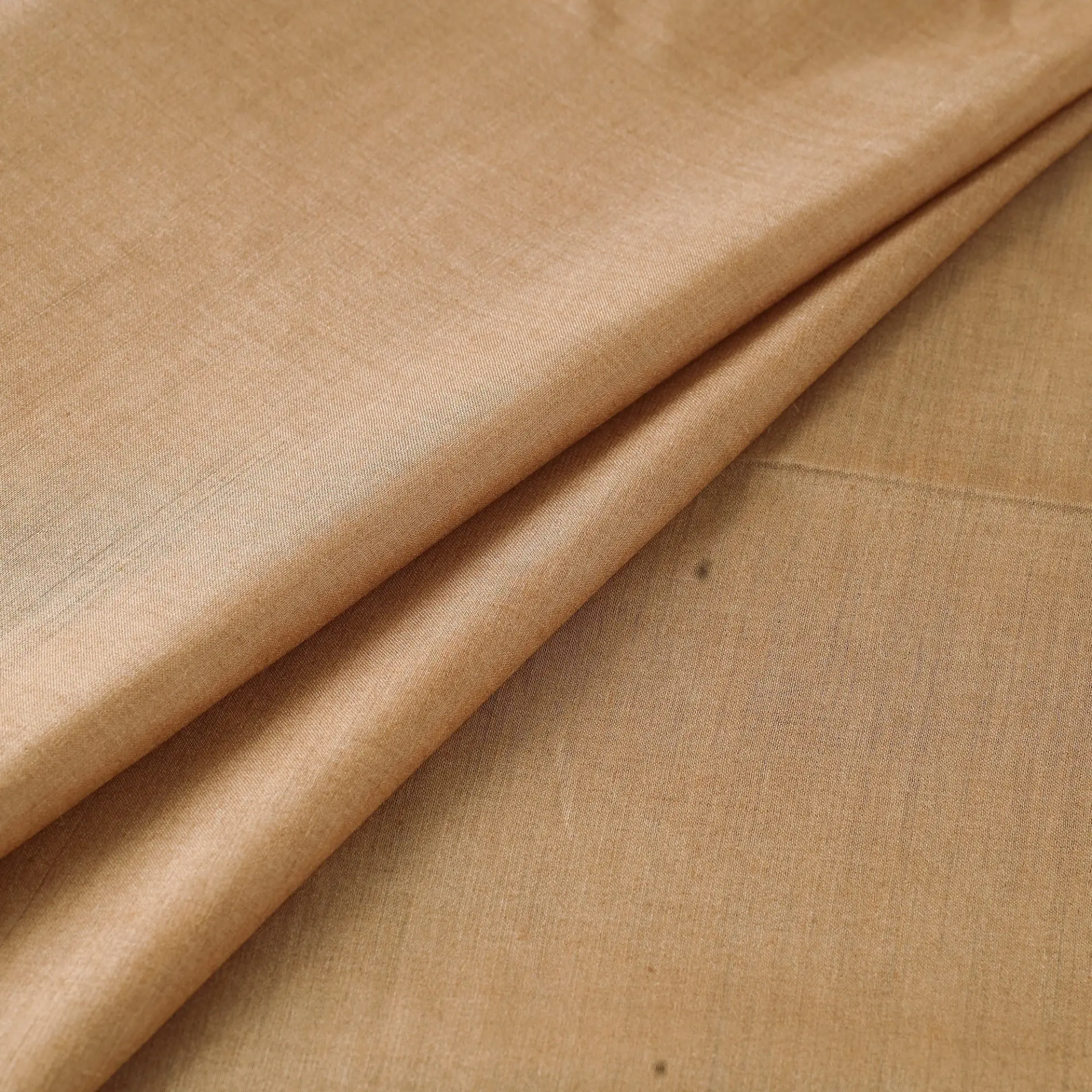
A wild silk (also known as Kosa). The silkworms feed on forest trees like Arjun and Asan, giving the fibre a natural, earthy coloration — from deep honey to beige.
The Organic Character+
Its slight irregularities and slubs are not flaws but signatures of its authentic origin. Porous and breathable, it is arguably the most comfortable silk for India's diverse climates.
Why Silk?
Some fabrics clothe us. Silk has been cherished.
Silk is unlike most textiles because it begins not as a spun plant fibre, but as a continuous protein filament created by the silkworm.
Its extraordinary fineness, smooth surface, natural lustre and fluid drape have made silk desirable for centuries. Yet silk is not one single look or feeling. From the luminous smoothness of Mulberry silk to the more textured character of Eri, Muga and Tasar, each silk carries a different expression of the fibre.
That is what makes silk special: it can feel refined without feeling uniform.
A silk garment is not simply something to wear. It is a connection between nature, fibre, craft, history and the person who wears it.
The Hand of Silk
Why does silk feel so different?
- Silk filaments are exceptionally fine — a quality that contributes to softness, flexibility and fluid drape.
- Silk forms a continuous filament rather than short spun staple fibres, giving it a smooth structure in many constructions.
- That surface generally has low friction, which gives silk its characteristic smooth, cool hand.
- Silk naturally reflects light, creating the lustre it has long been prized for.
- Silk can transmit moisture vapour while also interacting with moisture in the textile environment.
- The exact feel varies by silk type, yarn, spinning, weaving, finishing and construction.
Silk does not have a single texture. Its beauty changes with its origin, filament, spinning and weave.
Mulberry silk is generally known for a smoother filament surface, while non-mulberry silks such as Muga, Eri and Tasar have more visible surface striations and can offer a more textured, matte or organic hand.
That texture is not a lesser quality. It is part of their identity — and part of the beauty of Assam's silk diversity.
What Makes Silk Different?
- Cotton
- Known for absorbency, versatility and everyday comfort.
- Linen
- Known for coolness, breathability and a crisp, textured hand.
- Wool
- Known for warmth, resilience and natural moisture regulation.
- Silk
- Known for its exceptionally fine filament, smooth surface, natural lustre, fluid drape and distinctive tactile character. Silk is the jewel of clothes.
A Guide to the Hand
Can you tell Eri silk from cotton or linen?
Eri silk has a character of its own — but if you have never handled it before, its natural texture can sometimes make you wonder: silk, cotton or linen? Here are a few clues to look for. They are useful signs, not absolute rules.
Eri Silk vs Cotton
Both are natural fibres, but they come from completely different origins and behave differently in the hand.
Fibre origin
Eri silk
Eri is a natural protein fibre produced by the silkworm. Unlike reeled filament silks, Eri is generally spun from shorter fibres after the cocoon is opened.
Cotton
Cotton is a natural cellulose fibre that grows around the seeds of the cotton plant.
Look & surface
Eri silk
Eri often has a softly textured, slightly irregular surface. Depending on the yarn and weave, you may see subtle slubs and a gentle natural character rather than a perfectly uniform surface.
Cotton
Cotton tends to have a more familiar matte appearance, although its surface can vary considerably depending on the yarn, weave and finish.
Touch & drape
Eri silk
Eri can feel soft, substantial and naturally textured, with a distinctive drape that changes according to the yarn and weave.
Cotton
Cotton can range from crisp to soft, but generally has a different hand and drape from silk.
Fibre structure. Under magnification, cotton has characteristic twists or convolutions along the fibre. Silk fibres have a very different morphology and are generally smoother in appearance — a difference best seen under a microscope, not with the naked eye.
A note on burn tests. A burn test is sometimes used in textile identification because silk, as a protein fibre, behaves differently from cotton, a cellulose fibre. However, it is not a foolproof home test — blends, finishes and fabric construction can affect the result, and open-flame testing is unsafe if performed casually. For certainty, fibre identification by microscopy or professional textile testing is the better approach. Please never test a finished garment.
Eri Silk vs Linen
Eri silk and linen are both natural textiles, and both can have beautiful texture. The easiest clues come from their fibre structure, hand, drape and surface character.
Origin
Eri silk
Eri is an animal-derived protein fibre produced by the Eri silkworm and spun into yarn.
Linen
Linen is a plant-based cellulose textile made from flax.
Surface & texture
Eri silk
Eri can have a soft, slightly irregular and organic surface, particularly in handspun or textured constructions.
Linen
Linen often shows a more visibly dry, crisp or slightly irregular texture. Slubs can occur naturally in linen yarns, depending on the construction.
Drape & hand
Eri silk
Eri generally has a softer, more fluid textile character, although the exact hand depends strongly on spinning, weaving and finishing.
Linen
Linen often has more body and crispness, with relatively low elasticity. Its drape can be more structured and relaxed rather than fluid.
Surface lustre
Eri silk
Eri can have a subtle natural lustre, although many Eri textiles are more matte and textured than highly lustrous Mulberry silk.
Linen
Linen can also have a natural lustre, but its irregular fibre structure gives it a distinctly different visual character.
Fibre structure — the most useful technical clue. Under a microscope, flax fibres have characteristic crosswise markings or ‘nodes’ along their length. Silk has a different fibre morphology and does not show the characteristic flax node structure.
Look for These Clues
Eri Silk
- Protein fibre
- Soft, organic textile character
- Often subtly textured or irregular
- Distinctive silk drape and hand
- Fibre structure differs from plant fibres
Cotton
- Cellulose fibre
- Characteristic twisted/convoluted fibre structure under magnification
- Wide range of textures and finishes
Linen
- Cellulose fibre from flax
- Characteristic crosswise nodes under magnification
- Often crisp, structured and naturally irregular
Remember: appearance alone cannot always prove fibre content. Blends, yarn construction, dyeing and finishing can change how a textile looks and feels. For certainty, professional fibre identification is recommended.
Every Wardrobe Deserves Silk
Every wardrobe deserves silk.
Silk does not belong only to ceremonies, heirlooms or special occasions. Its beauty lies in its versatility.
A silk saree can carry generations of tradition. A silk shirt can make everyday dressing feel considered. A silk stole can transform a simple outfit. A contemporary silk silhouette can feel completely modern while remaining connected to an ancient textile story.
Silk can be quiet or dramatic, luminous or matte, fluid or structured, ceremonial or everyday. There is a silk for every mood — and a place for silk in every wardrobe.
At Samrajni, we believe silk should not feel distant or reserved for a select few. Everyone deserves to experience it.
Silk is not only for special occasions.
Silk is not only for heirlooms.
Silk is not only for a select few.
Silk belongs in every wardrobe.
Sources · Textile Notes +
Silk science and Assam sericulture notes are based on government and peer-reviewed textile research.
- — Central Silk Board, Ministry of Textiles, Government of India — silk varieties and sericulture (csb.gov.in).
- — Directorate of Sericulture, Government of Assam — Mulberry, Eri, Muga and Oak Tasar in Assam.
- — Peer-reviewed textile science research on silk fibre fineness, surface morphology, friction and drape.